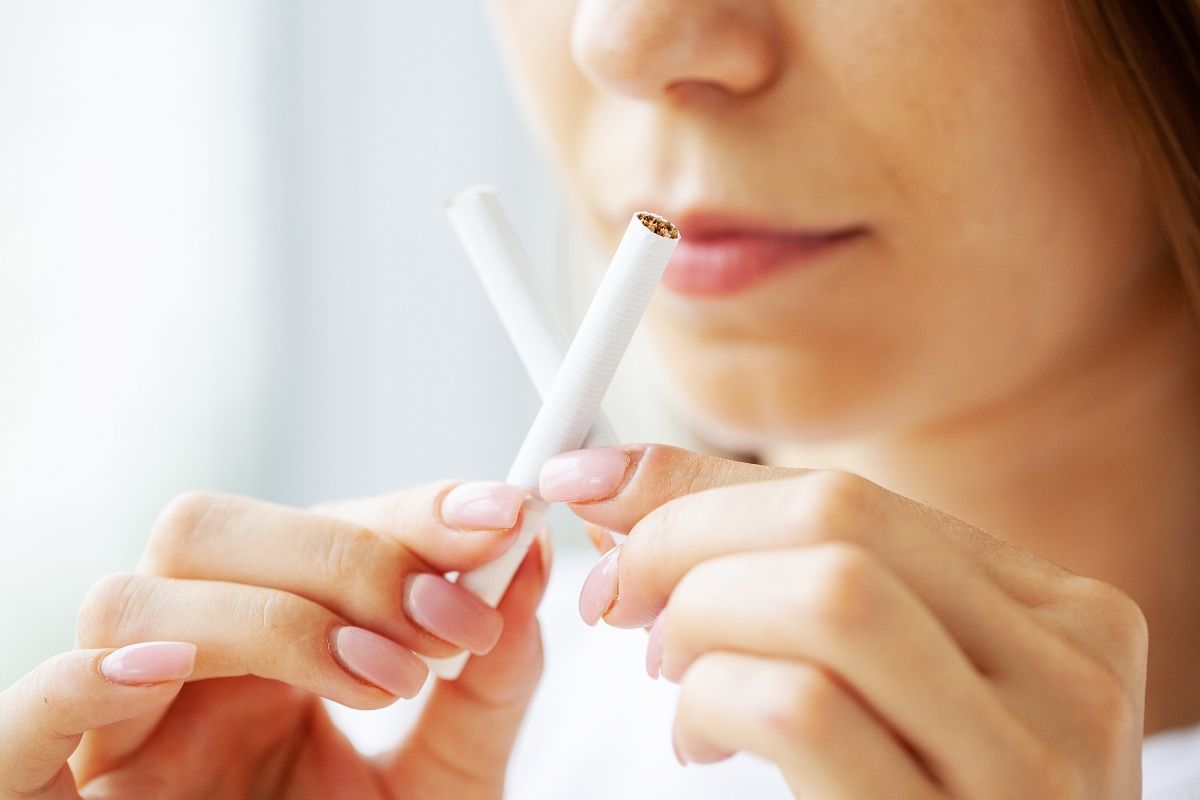
You should avoid smoking for at least two weeks after dental implant surgery, although waiting longer is better. Ideally, stop smoking before surgery and continue avoiding it throughout the healing and implant integration process.
Smoking can restrict blood flow, slow tissue repair, increase infection risk, and interfere with the process that allows the implant to fuse with your jawbone.
The longer you avoid smoking, the better the conditions for healing and long-term implant success.
Why Should You Avoid Smoking After Dental Implant Surgery?
Dental implant surgery involves placing a titanium post into your jawbone to replace a missing tooth root. After placement, the surrounding bone and gum tissue need time to heal.
Smoking exposes your mouth to nicotine, carbon monoxide, heat, and other harmful chemicals that can interfere with this process.
Here are the main concerns.
1. Smoking Reduces Blood Flow
Nicotine narrows blood vessels and reduces blood circulation. Your healing gums need a steady supply of oxygen and nutrients to repair damaged tissue.
Reduced blood flow can delay healing and make it harder for the surgical site to recover properly.
2. Smoking Increases Infection Risk
Your mouth naturally contains bacteria, and the surgical area needs protection while it heals.
Smoking can interfere with your body’s immune response and increase the risk of infection around the implant.
Signs of a possible infection include:
-
Increasing pain or swelling
-
Persistent bleeding
-
Pus around the surgical site
-
Unpleasant taste or odor
-
Fever or worsening discomfort
Contact your dental provider if these symptoms develop.
3. Smoking Can Interfere With Osseointegration
Osseointegration is the process in which your jawbone grows around and bonds with the dental implant.
This connection gives the implant the stability it needs to support a replacement tooth.
Smoking can interfere with bone healing and increase the risk of implant failure. This is particularly concerning during the early healing period.
4. Smoking Can Increase the Risk of Gum Problems
Smoking can contribute to inflammation and damage around dental implants. Over time, this may increase the risk of peri-implantitis, an inflammatory condition that affects the gum and bone surrounding an implant.
If left untreated, peri-implantitis can cause bone loss and threaten implant stability.
How Long Should You Wait Before Smoking After Implant Surgery?
There is no completely safe time to resume smoking after implant placement. However, avoiding tobacco during the early healing period is especially important.
| Time after surgery | Smoking recommendation |
|---|---|
| First 24 hours | Do not smoke |
| First 72 hours | Strictly avoid smoking |
| First 2 weeks | Continue avoiding smoking |
| Following weeks | Avoid smoking throughout healing |
| Long term | Quitting offers the best protection for implant health |
Two weeks is a minimum precaution, not a guarantee that smoking is safe afterward.
Your provider may recommend a longer period depending on the complexity of your procedure, bone grafting, gum healing, and overall health.
What Happens If You Smoke Too Soon After Implant Surgery?
Smoking shortly after surgery can expose the healing area to nicotine and other chemicals when the tissues are particularly vulnerable.
Potential complications include:
-
Delayed gum healing
-
Increased inflammation
-
Higher risk of infection
-
Poor bone integration
-
Greater likelihood of implant complications or failure
One cigarette does not automatically mean your implant will fail. However, repeated smoking can increase the risks.
If you have already smoked after surgery, avoid further smoking and inform your dentist. Follow their instructions rather than assuming damage has occurred.
Does Vaping Affect Dental Implant Healing?
Yes. Vaping is not a safe alternative during implant recovery.
Many vaping products contain nicotine, which can restrict blood vessels and interfere with healing. Even nicotine-free vaping may expose your mouth to chemicals that can irritate oral tissues.
Avoid vaping during recovery unless your dental provider gives you specific guidance.
How Can You Protect Your Dental Implant While It Heals?
Following your post-surgical instructions can help reduce complications and support proper healing.
Consider these precautions:
-
Avoid smoking, vaping, and tobacco products.
-
Do not use straws during the period recommended by your dentist.
-
Eat soft foods while the surgical site heals.
-
Avoid touching or disturbing the implant area.
-
Follow your dentist’s instructions for brushing and rinsing.
-
Take prescribed medications exactly as directed.
-
Attend all follow-up appointments.
If quitting smoking feels difficult, ask your healthcare provider about appropriate smoking cessation support. Discuss nicotine replacement options with your dental provider before using them during recovery.
When Should You Contact Your Dentist After Implant Surgery?
Some swelling, tenderness, and minor bleeding can occur after implant placement. These symptoms should gradually improve.
Contact your dentist if you notice worsening pain, persistent bleeding, pus, fever, or increasing swelling.
Difficulty breathing or swallowing, or rapidly spreading facial or neck swelling, requires emergency medical attention.
Your dental provider can examine the area and determine whether additional treatment is necessary.
Give Your Dental Implant the Best Chance to Heal
Dental implants require time and proper care to become stable. Avoiding smoking is one of the most important steps you can take to protect the healing process.
If you are preparing for implant surgery or have questions about recovery, visit our dental clinic in Vilonia. Vilonia Family Dental Care can explain the healing process, discuss your concerns, and guide you through appropriate implant aftercare. Visit our website to learn more about maintaining your oral health and protecting your treatment results.
Frequently Asked Questions :
1. Can you smoke 24 hours after dental implant surgery?
No. Smoking within the first 24 hours can interfere with blood flow and disturb the healing process. Avoid smoking for at least two weeks and preferably throughout implant healing.
2. Can one cigarette cause dental implant failure?
One cigarette does not automatically cause implant failure. However, smoking increases the risk of healing complications, especially when it becomes a repeated habit.
3. Is vaping safer than smoking after implant surgery?
No. Nicotine-containing vape products can restrict blood flow and interfere with healing. Avoid vaping during recovery.
4. How long does a dental implant take to heal completely?
Initial gum healing often takes a few weeks, but bone integration generally takes several months. The exact timeline depends on your procedure, bone health, and individual healing response.