
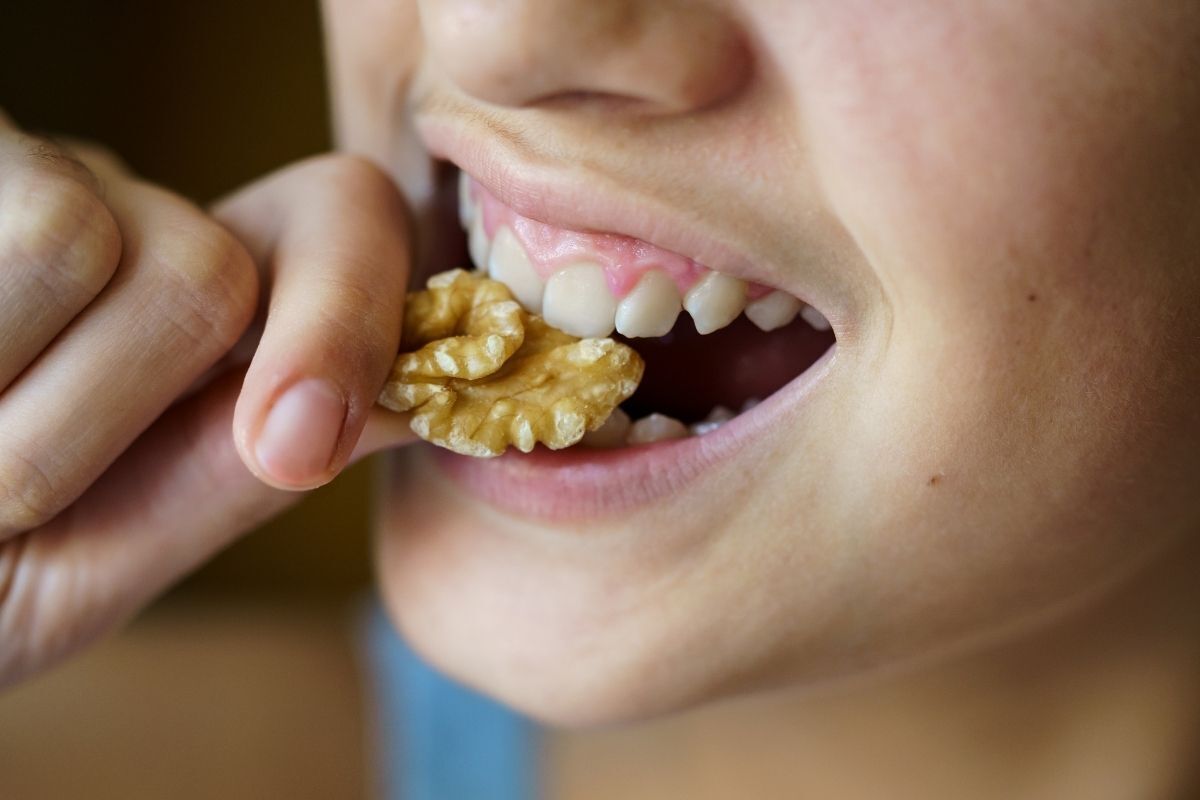
That sharp jolt you feel the moment your teeth touch is almost always a sign that something inside or around the tooth needs attention. Pain on biting usually points to one of a few culprits: a cavity that has reached the inner layers of the tooth, a crack in the enamel, a loose or worn filling, gum tissue that has pulled away from the root, or pressure from a sinus infection sitting right above your upper back teeth. Each of these has a different fix, which is why figuring out the exact cause matters more than just pushing through the discomfort.
Quick Answer
If chewing hurts, the pain is coming from one of three general places: the inside of the tooth (decay or a crack reaching the nerve), the structures around the tooth (gum or bone that has weakened), or somewhere entirely different, like your sinuses. The list below walks through each in detail so you can get a sense of what might be going on before you ever sit in the chair.
What’s Happening Inside the Tooth
These causes start within the tooth structure itself and typically get worse without treatment.
1. Tooth Decay That Has Reached the Nerve
A small cavity on the surface of a tooth rarely causes pain when you chew. But once decay eats through the enamel and dentin and gets close to the pulp, where the nerves and blood vessels live, biting pressure can send a sharp signal straight to your brain. The pain often feels worse with sweets, temperature changes, or the pressure of chewing itself. Left alone, this kind of decay tends to get worse, not better, and can eventually lead to an abscess.
2. A Cracked Tooth
Teeth crack for all sorts of reasons: chewing on ice, grinding at night, biting down on something hard unexpectedly, or simply years of wear. A crack that runs into the tooth structure can flex slightly every time you bite, irritating the nerve inside. What makes cracked teeth tricky is that the pain is often inconsistent. You might feel a quick, stabbing pain when you release a bite rather than during the bite itself, and the tooth may look completely normal to the naked eye. X rays and a careful clinical exam are usually needed to confirm it.
3. A Loose or Failing Filling or Crown
Fillings and crowns aren’t permanent. Over years of chewing, the material can wear down, shift slightly, or develop a gap where bacteria sneak in underneath. When that happens, biting pressure can push on the restoration and irritate the tooth beneath it. Sometimes you can feel the filling move or notice a rough edge with your tongue. Other times the only clue is pain that shows up whenever you chew on that side.
4. An Abscessed Tooth
When infection reaches the tip of a tooth’s root, it can form a pocket of pus called an abscess. This is typically one of the more intense causes of biting pain, often accompanied by swelling, a bad taste, or a pimple like bump on the gum. An abscess needs prompt treatment since the infection can spread if ignored.
What’s Happening Around the Tooth
These causes involve the structures that support your teeth, or forces acting on them from outside.
5. Gum Disease and Bone Loss Around the Root
When gum disease progresses, it doesn’t just affect the gums; it can wear away the bone that holds a tooth in place. As that support weakens, the tooth can feel loose or tender, especially under the pressure of biting. This kind of pain tends to build gradually and often comes with other symptoms like bleeding gums, bad breath that won’t go away, or gums that look red and puffy rather than pink and firm.
6. Teeth Grinding and Clenching
If you grind your teeth at night, you may wake up with jaw soreness and teeth that feel tender the moment you bite into breakfast. Grinding puts repeated, forceful pressure on your teeth and the joints that connect your jaw to your skull, and over time it wears down enamel and inflames the ligaments that hold each tooth in its socket. This kind of pain usually eases up as the day goes on, only to return the next morning.
7. An Uneven Bite
Sometimes the tooth itself is perfectly healthy, but it’s making contact at the wrong angle or with too much force compared to its neighbors. This can happen after a new filling or crown is placed slightly too high, or it can develop naturally over time as teeth shift. An uneven bite concentrates pressure on one spot instead of spreading it evenly, and that single point can become sore and inflamed.
When the Cause Isn’t the Tooth at All
8. Sinus Pressure
This one surprises a lot of patients. The roots of your upper back teeth sit close to your sinus cavities, so when those sinuses become inflamed from a cold, allergies, or an infection, the pressure can radiate down into the roots. It can feel exactly like tooth pain, and biting down or tapping on the tooth can make it worse. A telltale sign is that several upper teeth hurt at once rather than just one, and the discomfort often improves once the sinus issue clears up.
How a Dentist Pinpoints the Cause
Since so many issues can produce similar symptoms, diagnosis usually involves a combination of steps within a single visit.
- A conversation about when the pain started, what makes it better or worse, and whether it’s constant or comes and goes.
- A visual exam of the tooth, gums, and any existing dental work.
- Gentle tapping and biting tests to isolate which tooth, or which side of a tooth, is reacting.
- X-rays to check for decay, cracks, or bone loss that aren’t visible to the eye.
- A bite test using thin strips of material to see exactly where the pressure is landing.
When You Should Stop Waiting and Get It Checked
A little sensitivity now and then isn’t necessarily an emergency, but certain signs mean you shouldn’t wait it out. Book a visit soon if you notice any of the following.
- Swelling in your face or gums.
- Pain that wakes you up at night.
- A fever alongside tooth pain.
- Discomfort that’s been sticking around for more than a few days.
- Pain that keeps getting worse instead of easing up.
Any one of these is your body telling you the problem isn’t going to resolve on its own.
Ready to Find Out What’s Really Going On?
Tooth pain when you bite down isn’t something to plan your meals around forever. Whatever the cause, from a small crack to a filling that’s finally worn out, it tends to get more complicated the longer it’s left alone. If chewing has become something you dread, come see the team at Vilonia Family Dental Care. Visit our dental clinic in Vilonia, and let’s get to the bottom of it before it turns into a bigger problem. You can reach us to schedule an appointment whenever it works for you.
Frequently Asked Questions :
1. Why does only one tooth hurt when I bite down, while the rest feel fine?
This pattern often points to something localized, like a crack, a failing filling, or decay in that specific tooth, rather than a broader issue like sinus pressure or grinding, which usually affects several teeth at once.
2. Can a tooth hurt when biting down even if there’s no visible damage?
Yes. Cracks and early decay often aren’t visible to the eye, and the pain can start well before any obvious sign appears on the surface. This is exactly why X-rays and a clinical exam matter.
3. Is it normal for a new filling to hurt when I chew?
Mild sensitivity for a few days after a filling is common, but pain that lingers past a week or gets sharper when you bite usually means the filling needs to be adjusted.
4. Should I avoid chewing on the painful side until I’m seen?
It’s a reasonable short-term step to reduce discomfort, but it shouldn’t replace getting the tooth evaluated, since most causes of biting pain won’t go away on their own.
5. Can stress-related teeth grinding really cause biting pain?
Yes, grinding puts significant repeated force on your teeth and jaw joints, and it’s one of the more common reasons people wake up with sore teeth even without any decay or damage present.